
Joyce Joseph

Metal Nanoparticle Coatings on Soft Materials

Metal Nanoparticle Coatings on Soft Materials

Want to read offline? [Download PDF] Soil contamination, from heavy metals, pesticides, and polycyclic aromatic hydrocarbons (PAHs), poses serious risks to human health and ecosystems. Conventional methods such as ICP-MS, GC-MS, and HPLC remain the gold standard for confirmatory analysis, but they require sophisticated laboratory infrastructure, lengthy sample preparation, and are poorly suited to rapid

Metal Nanoparticle Coatings on Soft Materials Read More »

TFLN-via-Magnetron-Sputtering_Nikalyte.

Thin Film Lithium Niobate Deposition via Magnetron Sputtering

Want to read offline? [Download PDF] Thin Film Lithium Niobate (TFLN) has become one of the most sought-after materials in modern photonics and integrated optoelectronics. With applications in telecommunications, quantum computing, photonic integrated circuits (PICs), and high-frequency electro‑optic modulators, TFLN is increasingly recognised as a cornerstone material for next‑generation optical technologies. [1],[2] Among available physical

Thin Film Lithium Niobate Deposition via Magnetron Sputtering Read More »

Detect PFAS with Nikalyte SERS

Detecting Forever Chemicals in our waterways with SERS

Want to read offline? [Download PDF] The global water quality crisis extends across continents, with the United Kingdom facing significant contamination challenges from Per- and Polyfluoroalkyl Substances (PFAS), commonly known as forever chemicals. These synthetic compounds persist in the environment for decades, accumulating in our bodies and waterways. As regulatory agencies establish stricter drinking water

Detecting Forever Chemicals in our waterways with SERS Read More »

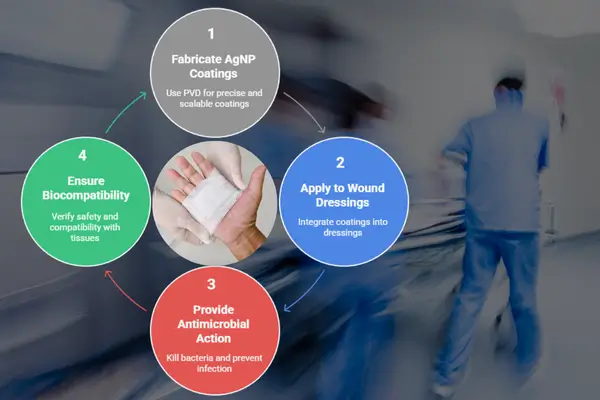
Nikalyte_Silver nanoparticle coatings for wound dressing applications

Silver nanoparticle coatings for wound dressing applications

Want to read offline? [Download PDF] In the evolving field of advanced wound care, silver nanoparticle (AgNP) coatings have become a cornerstone for developing antimicrobial dressings that are both effective and biocompatible. Among various fabrication techniques, Physical Vapor Deposition (PVD) stands out for its ability to deliver precise, reproducible, and scalable silver coatings at the

Silver nanoparticle coatings for wound dressing applications Read More »

Nikalyte_Plasmonic Catalysts for CO₂ Reduction

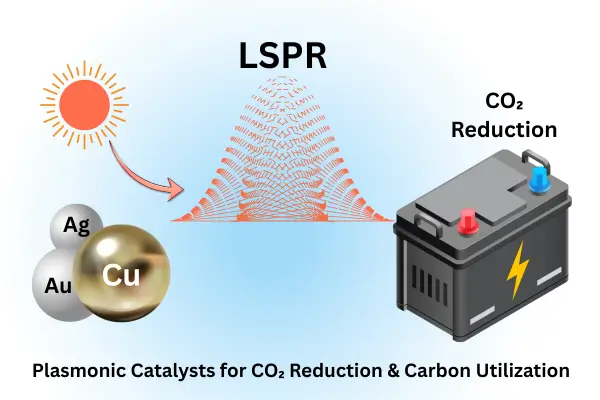
Plasmonic Catalysts for CO₂ Reduction & Carbon Utilization

Want to read offline? [Download PDF] The global push towards carbon neutrality has accelerated research into advanced catalytic systems that can convert CO₂ into valuable fuels and chemicals. Among the many emerging strategies, plasmonic catalysts for photo-thermal CO₂ reduction are gaining significant attention from researchers, students, professors, and industry experts alike. This article explores the

Plasmonic Catalysts for CO₂ Reduction & Carbon Utilization Read More »

Nikalyte’s Alloy Nanoparticle UHV Deposition Source at the University of Oxford

High-Entropy Alloy Catalysts for Green Hydrogen Production

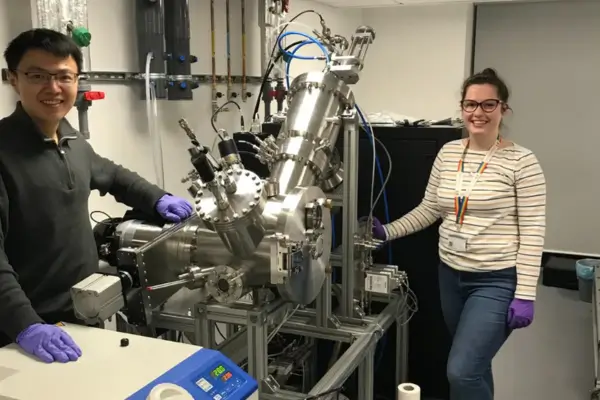
Image Description: Nikalyte’s Alloy Nanoparticle UHV (Ultra-High Vacuum) Deposition Source at the University of Oxford, with Peixi Cong and Leanne Jones (Postdoctoral Fellows). Industry: Green Energy / Hydrogen Production / Nanomaterials Challenge: As global efforts ramp up towards decarbonization, efficient hydrogen production from water electrolysis becomes increasingly important. A major barrier to scaling up water

High-Entropy Alloy Catalysts for Green Hydrogen Production Read More »

Nikalyte_AEMWE (Alkaline Anion Exchange Membrane Water Electrolyzer) cell

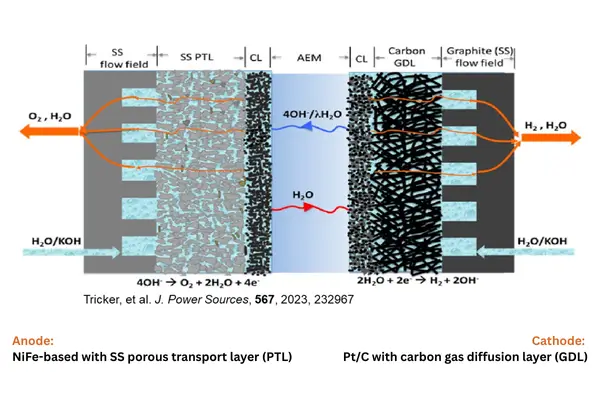
Low Cost Electrocatalysts for Hydrogen Production from Water

Image Description: Copper nanoparticle coating on surgical wound dressings using Nikalyte, reducing MRSA colony formation. Industry: Healthcare / Wound Healing / Antibacterial Solutions Challenge: The client, an NHS Research Hospital, faced significant challenges in preventing and treating Methicillin-Resistant Staphylococcus aureus (MRSA) infections in wound care. They were looking for a solution to enhance the effectiveness

Low Cost Electrocatalysts for Hydrogen Production from Water Read More »

Why Niobium is Critical for Advanced Electronics and Quantum Materials

Why is Niobium Critical for Quantum Materials

Want to read offline? [Download PDF] Niobium (Nb) is more than a niche refractory metal, it’s a cornerstone material for next-generation electronics, superconducting devices, and quantum technologies.[1] Its unique combination of superconducting, thermal, and corrosion-resistant properties makes it essential for systems that demand extreme performance, operate at cryogenic temperatures, or function in challenging environments. In

Why is Niobium Critical for Quantum Materials Read More »

Scroll to Top