Biomimicry is a revolutionary concept referring to the imitation of natural processes in artificial settings. It is a hallmark of sustainable research and development (R&D), contributing to circular and regenerative engineering in a host of applications. The concept is simple: We emulate natural processes to resolve critical challenges facing mankind today. Although this approach dovetails nicely with modern sustainability initiatives, it isn’t entirely new. Designers have always turned to nature for inspiration. However, our scientific capabilities have reached a new zenith from which we can apply the smallest – and most successful – of nature’s strategies to some of the largest problems of the day.Artificial photosynthesis is an exciting example of a biomimetic process. It aims to replicate nature’s most efficient energy conversion process, but instead of converting sunlight, water, and carbon dioxide (CO2) into glucose and oxygen, the goal is to yield hydrogen or other useful chemicals. The process involves two main steps: water splitting and carbon dioxide reduction. Catalysts play a crucial role in both steps, speeding up the reactions and making them more efficient.
The Role of Catalysts in Artificial Photosynthesis
Catalysts are substances that increase the rate of a chemical reaction without being consumed in the process. In artificial photosynthesis, catalysts are used in both the water splitting and carbon dioxide reduction steps. They help to lower the energy barrier for these reactions, making them proceed more quickly and efficiently. One of the most effective catalysts for the oxygen evolution reaction (OER) in water splitting is iridium. Iridium catalysts have shown excellent performance in terms of activity and stability, yet it remains one of the rarest elements on earth. The scarcity of iridium makes it inordinately expensive and unsustainable for practical, large-scale application.
The Need for Iridium Alternatives
Given the scarcity and high cost of iridium, researchers are actively seeking alternatives. One promising avenue of research is the development of high-entropy alloys (HEAs). These are alloys that contain five or more elements in roughly equal proportions. HEAs have shown promise in a variety of applications, including as catalysts for water splitting.
High-Entropy Alloys: A New Frontier in Water Splitting
High-entropy alloys offer several advantages over traditional catalysts. They are highly stable and resistant to corrosion, making them ideal for long-term use in water splitting reactions. By carefully selecting the ratios of alloying elements, researchers can fine-tune catalytic activity to optimise performance.
Practical Applications of Artificial Photosynthesis Catalysts
The development of efficient and sustainable catalysts for artificial photosynthesis has far-reaching implications. It could lead to the production of clean, renewable hydrogen fuel, helping to reduce our reliance on fossil fuels. Moreover, it could enable the conversion of carbon dioxide, a greenhouse gas, into useful chemicals, helping to mitigate climate change.
Our Contribution to Catalyst Research
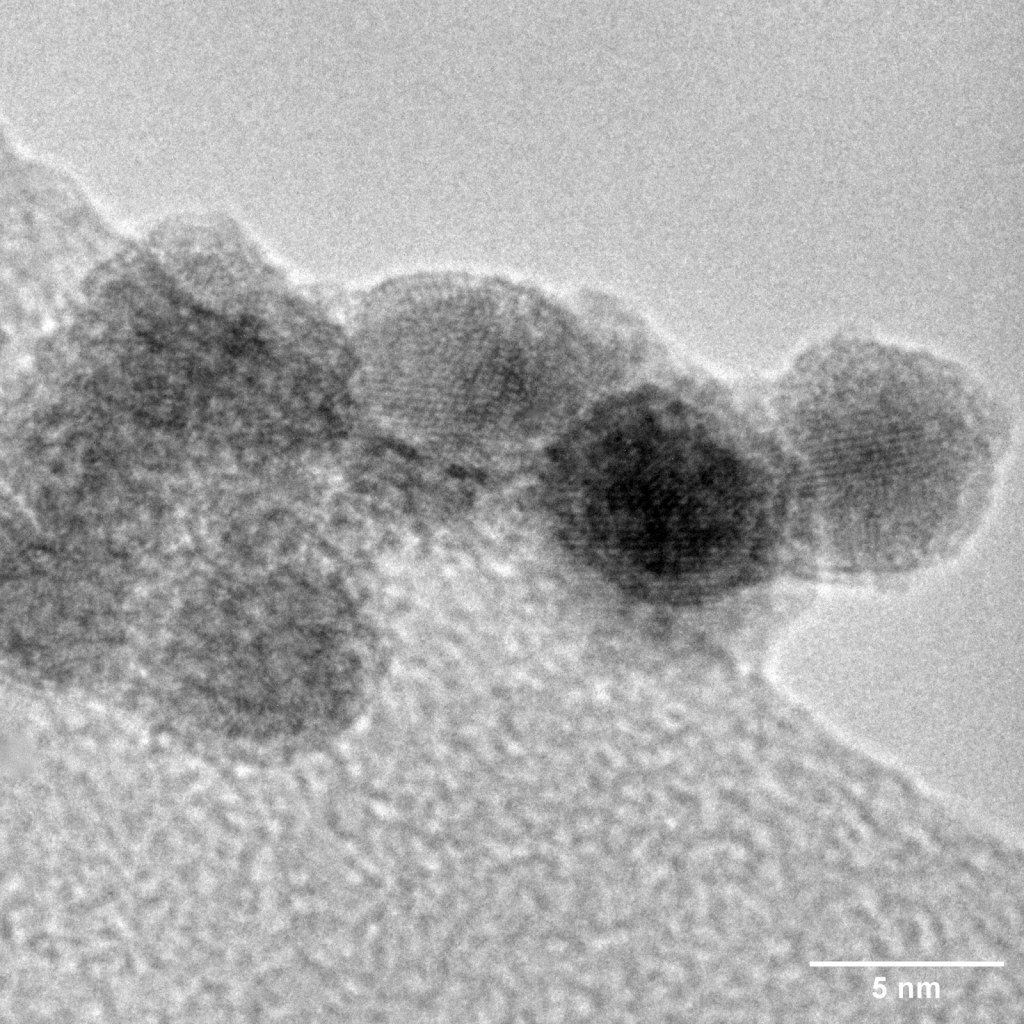
At Nikalyte, we are at the forefront of catalyst research. Our NL50 benchtop system allows for the deposition of ultra-pure metallic nanoparticles, including those used in catalysts for artificial photosynthesis. The NL50 utilises magnetron sputtering to generate a beam of ultra-pure nanoparticles in vacuum, which can be generated from any metal or conductive material, including Au, Ag, Cu, Pt, Ir, Ni, Ti, and Zr. This technology opens up new possibilities for the development of high-performance catalysts for artificial photosynthesis.NiFeCoMoAl HEA nanoparticle catalyst (courtesy Nikalyte)
We use cookies on our website to give you the most relevant experience by remembering your preferences, repeat visits and also for personalised advertising of our goods and services. By clicking “Accept All”, you consent to the use of ALL the cookies. However, you may visit "Cookie Settings" to provide controlled consent. View our Privacy and Cookie Policy for more information.
This website uses cookies to improve your experience while you navigate through the website. Out of these, the cookies that are categorized as necessary are stored on your browser as they are essential for the working of basic functionalities of the website. We also use third-party cookies that help us analyze and understand how you use this website. These cookies will be stored in your browser only with your consent. You also have the option to opt-out of these cookies. But opting out of some of these cookies may affect your browsing experience.
Necessary cookies are absolutely essential for the website to function properly. These cookies ensure basic functionalities and security features of the website, anonymously.
Cookie
Duration
Description
cookielawinfo-checkbox-analytics
11 months
This cookie is set by GDPR Cookie Consent plugin. The cookie is used to store the user consent for the cookies in the category "Analytics".
cookielawinfo-checkbox-functional
11 months
The cookie is set by GDPR cookie consent to record the user consent for the cookies in the category "Functional".
cookielawinfo-checkbox-necessary
11 months
This cookie is set by GDPR Cookie Consent plugin. The cookies is used to store the user consent for the cookies in the category "Necessary".
cookielawinfo-checkbox-others
11 months
This cookie is set by GDPR Cookie Consent plugin. The cookie is used to store the user consent for the cookies in the category "Other.
cookielawinfo-checkbox-performance
11 months
This cookie is set by GDPR Cookie Consent plugin. The cookie is used to store the user consent for the cookies in the category "Performance".
viewed_cookie_policy
11 months
The cookie is set by the GDPR Cookie Consent plugin and is used to store whether or not user has consented to the use of cookies. It does not store any personal data.
Functional cookies help to perform certain functionalities like sharing the content of the website on social media platforms, collect feedbacks, and other third-party features.
Performance cookies are used to understand and analyze the key performance indexes of the website which helps in delivering a better user experience for the visitors.
Analytical cookies are used to understand how visitors interact with the website. These cookies help provide information on metrics the number of visitors, bounce rate, traffic source, etc.
Advertisement cookies are used to provide visitors with relevant ads and marketing campaigns. These cookies track visitors across websites and collect information to provide customized ads.